


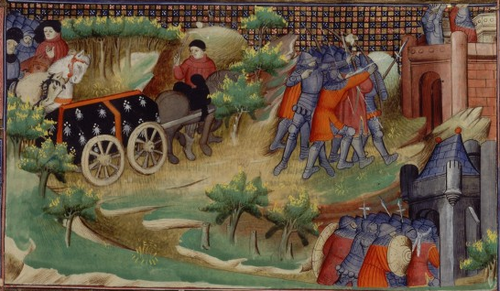
In medieval Europe, a king’s death rarely meant peace. Instead, it often opened the gates to war. Castles were fortified, banners raised, and rival claimants sharpened their swords—not against foreign enemies, but against their own kin. Succession wars were among the bloodiest and most frequent conflicts of the Middle Ages. But why did so many kingdoms fall into chaos simply because a ruler died?
The answer lies in a volatile mix of unclear laws, family ambition, and fragile political systems.
The Problem of Unclear Succession Laws
Unlike modern states, medieval kingdoms rarely had fixed, universally accepted rules for inheritance. Some followed primogeniture, where the eldest son inherited the throne. Others practiced partible inheritance, dividing lands among sons—a recipe for fragmentation and rivalry.
To make matters worse, succession customs varied by region and could change over time. When a king died, nobles often argued over which law applied this time. These legal gray areas allowed multiple claimants to present themselves as the “rightful” ruler.
In short, the law did not end debates—it fueled them.
Too Many Heirs, Too Much Ambition
Royal families were large, and ambition ran deep. Kings had legitimate sons, younger sons, daughters, nephews, cousins, and sometimes illegitimate children who still wielded influence.
Even when an heir was named, rivals often believed:
- They had a stronger blood claim
- They were more capable of ruling
- The chosen heir was too young, weak, or unpopular
In medieval politics, belief mattered as much as legality. If a claimant could gather enough supporters, their claim became real—at least on the battlefield.
Weak Central Authority
Medieval kings ruled through a delicate balance of loyalty rather than absolute power. Powerful nobles controlled armies, land, and wealth of their own. When a monarch died, that balance often collapsed.
During transitions:
- Nobles backed the claimant who promised greater privileges
- Some switched sides to protect their own power
- Others rebelled outright, using succession disputes as cover
A weak or child ruler was especially vulnerable, making succession wars almost inevitable.
The Role of the Church
Religion added another layer of complexity. The Church held immense influence and often weighed in on legitimacy—through coronations, annulments, or declarations of lawful marriage.
If a marriage was declared invalid, an heir could suddenly be branded illegitimate. If a rival gained papal support, their claim gained moral authority. Disputes over divine approval frequently escalated political disagreements into full-scale wars.
Foreign Powers and Opportunism
Succession crises were invitations for outside interference. Neighboring kingdoms supported claimants who would serve their interests—or weaken a rival realm.
Foreign rulers might:
- Fund or arm a rival claimant
- Claim the throne through marriage ties
- Invade under the pretense of “restoring order”
What began as a family dispute often grew into an international conflict.
No Peaceful Transfer of Power
Perhaps the most important reason succession wars were so common is simple: there was no reliable system for peaceful transition. No elections. No constitutional safeguards. No neutral institutions to enforce outcomes.
Power passed through blood and force—and when bloodlines were disputed, force decided the matter.
A Legacy Written in Blood
From the Wars of the Roses in England to countless lesser-known conflicts across Europe, medieval succession wars followed a familiar pattern: a dead king, a disputed heir, ambitious nobles, and a kingdom torn apart.
These wars were not accidents of history. They were the natural outcome of a world where law was flexible, loyalty was fragile, and power belonged to those strong enough to claim it.
In medieval times, the crown was never simply inherited—it was contested.