


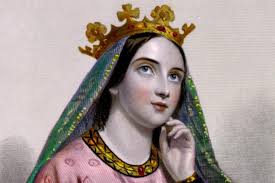
History tends to celebrate kings, warriors, and conquerors, but the relatives who stand by them—queens, consorts, and companions—are sometimes lost to history. Queen Berengaria of Navarre, the wife of England’s most cherished warrior-king, Richard the Lionheart, is one of those figures often referred to as the “forgotten queen.” Berengaria’s life was a quiet but compelling life. Reimagining her story becomes a reimagining of a woman who lived in the shadow of power and who maneuvered her own historic place through struggle, strength, and her own process of choice.
The Young Navarrese Princess
Around the year 1165, Berengaria was born as the daughter of King Sancho VI of Navarre and was, therefore, a princess. For once, this acceptable young woman was not destined for a life of obscurity in noble society. Because of her intelligence, beauty, and political assets, she had the prospects of a viable marriage. In a world where marriage serves as a diplomatic tool, Berengaria’s fate was determined by political strategists rather than her parents seeking the ideal love story for their daughter.
Marriage to Richard the Lionheart
The honeymoon began in 1191, when Berengaria wed Richard I of England in Cyprus while on the Third Crusade. Picture this! A royal nuptial among military undertakings, and the taking of marriage with knights, banners, and war as the backdrop. Berengaria’s marriage to Richard did not begin like most but continued to be anything but ordinary.
Richard’s reign was mostly associated with foreign countries—first, he fought in the Holy Land, then as a captive, and finally he engaged in military campaigns in France. In contrast, Berengaria was never able to travel to the land of her queenly title, and this strange situation left the queen powerful yet impotent.
A Queen Without A Kingdom
To rethink Berengaria’s life means to wonder: how did it feel to be the queen of a nation while never actually residing there? Was she lonely, neglected, or perhaps just quietly relieved to live far away from the political turmoil and conflict of London and Westminster?
Berengaria made her home in Le Mans, France, after Richard’s death. She lived humbly by the standards of royalty, directing her energy towards religious life and charitable acts. She helped to found an abbey and console the locals, and she eventually gained local respect as a wise and dignified widow.
The Strength of Silence
History has turned Berengaria’s life into something clearly tragic: a queen married to a man she rarely laid eyes on and then never had a chance to lead in the way queens are traditionally described. But perhaps Berengaria prompts us to take another look: instead of seeing her influence in battle or court politics, we can see her acquiescence in silence, her commitment to faith, and her determination to help others.
During an era when queens were expected to produce heirs and influence their spouses, Berengaria, by any definition, broke the mold of queenship. She became a symbol of dignity, piety, and resilience—a woman of faith entirely overlooked in the overarching theme of medieval history.
Rethinking Her Story Today
Rethinking the life of Queen Berengaria tells us that not all legacies are made in positions of power and prestige. Some legacies are made from strength, faith, and the conviction to preserve one’s identity in the shadows of others.
Maybe it is Berengaria’s life and legacy that resonate today because they reflect a true reality of life: not everyone is remembered for their boldest victories, but instead as a strong person who carries their life the best they can and finds meaning in their own existence. While she may have been classified as the “forgotten queen,” and even though she may say she is forgotten, she does not deserve to be classified this way: she was a woman who carved her own way elsewhere in history’s margins.