
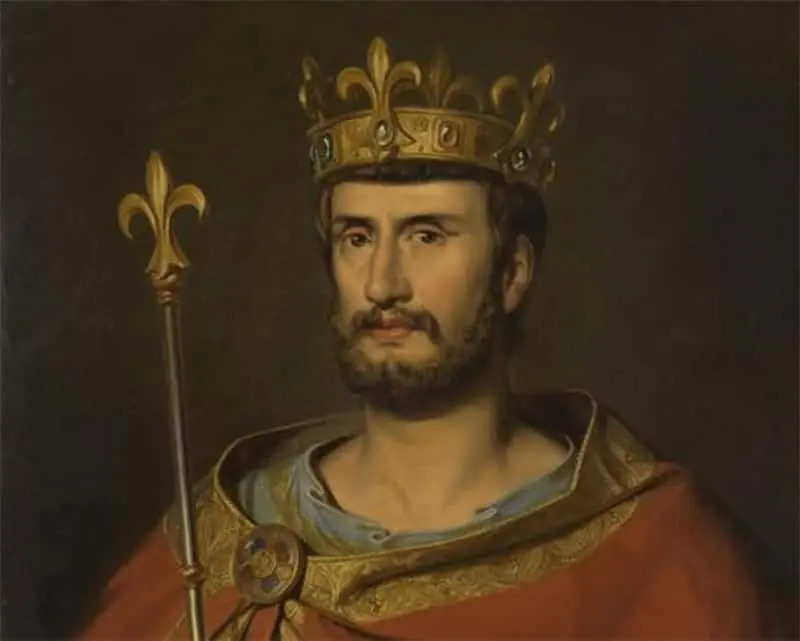
The little told story of William the Conqueror’s eldest son, Robert, Duke of Normandy.
A man who trod his own path in life, unmoved by his father’s dislike of his stature, Robert was nevertheless an attractive man with a ready access to adventurous women. His prowess as a cavalryman was proven when he unhorsed his father in combat and later went on to become one of the foremost generals in the First Crusade, without Robert’s skill and determination the First Crusade would have undoubtably fallen into disarray and failed.
A remarkable life of conflict and romance lived to the full, his effigy sits proudly in Gloucester cathedral to this day.
Robert Curthose, the eldest son of William the Conqueror, lived a life filled with ambition, conflict, adventure and romance. Born into one of the most powerful families in medieval Europe, he was expected to inherit his father’s lands and continue the Norman dynasty.
Instead, Robert often found himself at odds with his father and his brothers. His disagreements with William the Conqueror eventually led to open rebellion, while his later adventures took him far beyond Normandy and into the First Crusade.
Robert was not simply the rebellious son of a famous king. He was an experienced soldier, a skilled cavalryman and a man who built his own reputation on the battlefield.
Who Was Robert Curthose?
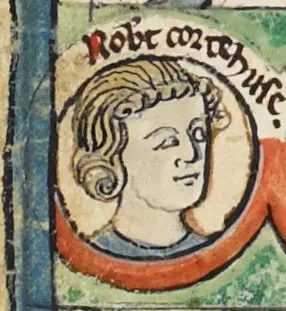
Robert Curthose was born around 1051, the eldest son of William, Duke of Normandy, and Matilda of Flanders. His nickname, “Curthose”, is generally understood to have come from the Norman French words for “short stockings”, although medieval sources do not give us a completely certain explanation.
As William’s eldest son, Robert had a strong claim to Normandy. Yet his relationship with his father was difficult from an early age.
William had conquered England in 1066 and became one of the most powerful rulers in Europe. His growing authority created an obvious problem for his sons: each had expectations of his own.
Robert wanted greater independence and authority in Normandy. William, however, was reluctant to give his eldest son complete control while he was still alive.
That tension would shape much of Robert’s early life.
Robert and His Father’s Difficult Relationship
Robert’s relationship with William became increasingly strained as he grew older. He wanted his father to treat him as the rightful heir to Normandy, but William continued to exercise strong control over the duchy.
The dispute eventually became much more serious than a disagreement between a father and son.
Robert joined a rebellion against William in the early 1070s, supported by some Norman nobles and his uncle Robert, Count of Flanders. The young Robert had the backing of people who believed he deserved more power, but his rebellion placed him directly against one of the most formidable rulers of the age.
The conflict also produced a remarkable moment on the battlefield.
During fighting near Gerberoy in 1079, Robert reportedly encountered his own father in combat and knocked William from his horse. William was wounded and humiliated by the encounter.
For Robert, it demonstrated his ability as a warrior. For William, it was a painful reminder that the son he had raised could now challenge him with a sword in hand.
The two eventually reconciled, but their relationship never became simple.
A Warrior With a Reputation
Robert’s military reputation grew throughout his life. Medieval warfare depended heavily on mounted soldiers, and Robert became known as an accomplished cavalryman.
His ability was not simply inherited from his father. Robert gained experience through years of conflict, rebellion and campaigning.
He also had qualities that made him useful to other powerful leaders. He was brave, experienced and willing to take risks, even when his political decisions did not always work in his favour.
That combination would become particularly important when Robert joined the First Crusade.
Robert Curthose and the First Crusade
In 1096, Robert joined the First Crusade, setting out for the Holy Land with other major European nobles.
The expedition brought together armies from different parts of Europe, each with its own leaders and interests. Keeping such a force together was difficult, and military success depended heavily on experienced commanders.
Robert proved himself an important figure during the campaign.
He took part in the long march towards Jerusalem and fought in several major engagements. His experience as a cavalry commander gave him an important role within the crusading army.
The First Crusade eventually captured Jerusalem in 1099, after years of difficult campaigning.
Robert was among the leading Norman nobles who reached the Holy Land, and his involvement helped establish his reputation as a serious military commander rather than simply William the Conqueror’s rebellious son.
Why Robert Mattered During the First Crusade
The First Crusade was not a single, organised army under one unquestioned commander. Different nobles controlled their own forces, and disagreements between leaders were common.
Robert’s military experience therefore mattered.
He had already spent years fighting in Normandy and understood the realities of medieval warfare. His cavalry skills were particularly valuable during battles where mounted troops could break enemy formations or pursue retreating forces.
Robert also fought alongside other important leaders of the crusade, including his cousin Bohemond of Taranto and Robert II of Flanders.
His contribution is sometimes overshadowed by more famous crusaders, but Robert Curthose remained one of the expedition’s significant military figures.
A Life of Conflict and Romance
Robert’s life was not defined by warfare alone.
Like many powerful medieval nobles, he lived within a world where political marriages, personal relationships and alliances were closely connected. Contemporary and later accounts also portray Robert as a man who attracted women and enjoyed romantic relationships.
His personal life added another layer to an already complicated character.
Robert could be ambitious and rebellious, but he could also be generous and charismatic. Medieval writers sometimes presented him as impulsive, yet his military achievements show that he was capable of courage and determination when circumstances demanded it.
These contradictions make Robert more interesting than the simple image of a troublesome medieval prince.
Robert’s Struggle for Normandy
Robert returned from the First Crusade with military prestige, but his political position remained uncertain.
His younger brother William Rufus had become King of England after William the Conqueror’s death in 1087, while Robert inherited Normandy. Their brother Henry received other possessions.
The division created rivalry between the brothers.
Robert struggled to maintain control of Normandy and repeatedly found himself involved in disputes with William Rufus and Henry. His position weakened over time, while his brothers became increasingly powerful.
Eventually, Henry invaded Normandy in 1105. The following year, Robert suffered a decisive defeat at the Battle of Tinchebray.
He was captured and imprisoned.
This defeat effectively ended Robert’s rule as Duke of Normandy.
The Final Years of Robert Curthose
After Tinchebray, Robert spent the rest of his life as a prisoner.
He was moved between several places of confinement and never regained Normandy. His long imprisonment stands in sharp contrast to the adventurous life he had led in his younger years.
Robert died in 1134, decades after his defeat.
Although he never became King of England and ultimately lost Normandy, his life left a lasting mark on Norman history.
Robert Curthose’s Legacy
Robert Curthose remains an intriguing figure because his life never followed the straightforward path expected of a medieval heir.
He was the eldest son of William the Conqueror, yet he struggled against his father. He became a skilled warrior, challenged his own family on the battlefield, travelled across Europe and the Middle East during the First Crusade, and eventually lost his duchy to his younger brother.
His failures as a ruler should not completely overshadow his achievements as a soldier.
Robert had courage, military skill and a strong desire to make his own mark. His story is one of a man born into extraordinary circumstances who spent much of his life trying to escape the shadow of his famous father.
Today, Robert Curthose is still remembered in Gloucester Cathedral, where his effigy provides a lasting reminder of the Norman prince whose life was marked by ambition, conflict, warfare and romance.
A Prince Who Chose His Own Path
Robert Curthose never became the powerful king his father had been, and his political career ended in defeat and imprisonment.
Yet his story remains compelling.
He fought his own father, commanded troops in one of the most famous military expeditions of the Middle Ages and travelled farther than most Norman princes of his generation.
Robert’s life was far from perfect, but perhaps that is what makes his story worth remembering. He was not simply William the Conqueror’s eldest son. He was a warrior, a rebel, a crusader and a man who repeatedly tried to choose his own path.