

In the period of the 13th century the Forests of England were governed by royal appointments known as :The Keepers of the Kings Forest.
These appointments were often hereditary and passed down to the eldest child of the holders.
A forest was not necessarily all trees, but could be any tract of land designated by royal decree as, ‘Forest.’
During the period of the 1215 Magna Carta the Forest known as Sherwood, in Nottinghamshire, and the Forests of Lincolnshire. were governed by Keepers living in Laxton (North Nottinghamshire) and Lincoln Castle.
The Keeper living in Laxton castle was named, Matilda, and the Keeper in Lincoln castle was named, Nicholaa.
By coincidence both women had inherited their father’s appointments at the same time and both women were confirmed in their roles by three different kings. Richard I, King John, and King Henry III.
Heroines of their time, yet Matilda in particular has been pushed to one side by a fictitious character invented by Sir Walter Scott in his 19th century novel, ‘Ivanhoe.’
These brave women deserve a better place in history. Truth over invention, skirts over Lincoln green tights.
When people hear the words Sherwood Forest, they often think of Robin Hood, green tights and a bow in the hands of a legendary outlaw. But the real medieval story of Sherwood is far more interesting.
In the years surrounding Magna Carta in 1215, royal forests were not simply collections of trees. They were areas placed under special forest law by the Crown, with officials responsible for hunting rights, woodland resources and the enforcement of royal regulations.
Among those officials were hereditary keepers, and some of these positions passed to women. Two names stand out: Matilda de Caux of Laxton and Nicholaa de la Haye of Lincoln.
Their stories belong to the real history of medieval England, rather than the romantic world created centuries later by novelists.
What Was a Royal Forest?
A medieval forest was not necessarily a place covered in trees.
The word forest had a legal meaning. A king could designate a particular area as forest, bringing it under royal forest law. Such an area could contain woodland, heath, villages, fields and other land.
Sherwood was therefore much larger and more complicated than the modern image of a wooded landscape suggests. During the reigns of Henry II, Richard I and King John, extensive areas of Nottinghamshire and parts of Derbyshire came under forest law.
The king appointed officials to administer these lands, and in some cases the office became hereditary.
This is where Matilda de Caux enters the story.
Matilda de Caux: Keeper of Sherwood
Matilda de Caux inherited an extraordinary responsibility.
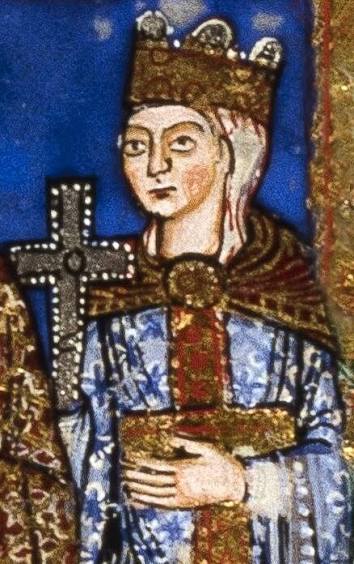
Her family held the hereditary keepership of the forests of Nottinghamshire and Derbyshire. When her father, Richard de Caux, died around 1167–1168, Matilda inherited the position while she was still young. Because of her age, others initially administered the office on her behalf.
Matilda later married Ralph FitzStephen, the king’s chamberlain, and the couple held the forest office together.
Their rights were formally confirmed by King John, then Count of Mortain, in a charter issued during the period 1189–1194. The charter recognised their claims and those of their heirs over the forests and associated liberties.
For a woman in medieval England, this was a significant inheritance. But Matilda’s greatest struggle was still ahead.
King John Takes Away Her Position
In 1202, Ralph FitzStephen died.
Matilda was now a widow, and King John removed her from the keepership. He also took control of Laxton, the family seat associated with the office.
Matilda did not simply accept the decision.
For around eighteen years, she pursued her claim to the lands and hereditary rights that had belonged to her family. During this period, the forests were administered through royal officials.
After King John’s death in 1216, Matilda regained her position under the government of the young Henry III. In 1220, she paid a further fine to have custody of the forests confirmed as her hereditary right.
Her story shows just how determined a medieval landholder could be when the Crown challenged an established inheritance.
What Did a Forest Keeper Actually Do?
The keeper’s work was practical as well as political.
Royal forests were governed by their own laws, and the keeper was responsible for protecting the king’s interests within them. The position connected the holder with forest officials, hunting rights, woodland resources and the administration of royal regulations.
Matilda’s role therefore placed her at the centre of a system that affected both the Crown and the people living within the forest.
She was not simply the holder of an impressive title. She had a working responsibility that she fought to retain.
Nicholaa de la Haye of Lincoln
A short distance from Laxton, another remarkable woman held an important place in the political life of medieval Lincolnshire.
Her name was Nicholaa de la Haye.
Nicholaa inherited substantial lands and became castellan of Lincoln Castle and sheriff of Lincolnshire. These positions placed her in charge of one of the most important strongholds in the region.
The National Archives records that Nicholaa inherited the position of constable of Lincoln Castle and the role of sheriff of Lincolnshire. She personally directed the castle’s defence on more than one occasion.
Her most famous challenge came during the political crisis that followed Magna Carta.
Nicholaa and the Siege of Lincoln
In 1217, during the First Barons’ War, forces supporting Prince Louis of France and the rebel barons besieged Lincoln Castle.
Nicholaa was already an older woman by this point, yet she took responsibility for the castle’s defence.
She maintained the resistance until William Marshal’s forces arrived and defeated the besieging army at what became known as the Battle of Lincoln, or the Lincoln Fair.
Nicholaa’s story is remarkable because her role was not created by later legend. She inherited her responsibilities and then faced one of the most dangerous military crises of her lifetime.
Two Women, Two Strongholds
Matilda at Laxton and Nicholaa at Lincoln lived different lives, but their stories reveal an overlooked side of medieval England.
Matilda spent years fighting to recover her family’s hereditary forest rights after King John removed her from office.
Nicholaa defended Lincoln Castle during a civil war that threatened the Crown itself.
Both women operated in a world where property and inherited responsibilities could place them directly in the middle of national politics.
Neither needed a fictional disguise to become a heroine.
Magna Carta and the Royal Forests
The year 1215 is particularly important because Magna Carta included provisions concerning royal forests.
The expansion of forest law under the Angevin kings had created resentment, and the barons demanded restrictions on some of the Crown’s powers. The Charter of the Forest, issued in 1217, went further in defining and reducing parts of the royal forest system.
For people living under forest law, these were not abstract legal arguments.
Forest regulations could affect hunting, woodland use, land clearance and everyday life. The officials responsible for administering those regulations consequently occupied an important place in local society.
Matilda’s story unfolded against this changing political background.
The Woman Behind the Sherwood Legend
There is an irony in the way Sherwood’s history has been remembered.
The forest became famous throughout the world because of Robin Hood, yet the real women who held positions within its administration are far less familiar.
Matilda de Caux was a historical figure who inherited the keepership of the forests and spent years trying to recover it.
Robin Hood, by contrast, belongs largely to the world of medieval legend and later literature.
Sir Walter Scott’s Ivanhoe, published in the nineteenth century, helped shape the popular image of Robin Hood’s world for generations of readers. That romantic version of medieval England can easily overshadow the complicated society that existed behind it.
The real Sherwood contained officials, landowners, villages, castles and communities living under forest law.
And among those responsible for administering that world was a woman named Matilda.
Remembering the Women Behind the Forest
Matilda de Caux deserves to be remembered because the surviving evidence shows a woman defending a hereditary right through years of political change.
Nicholaa de la Haye deserves the same attention. Her career brought her into the centre of one of the most dangerous conflicts of Henry III’s early reign, culminating in the defence of Lincoln Castle.
Their stories challenge the familiar picture of medieval women as passive figures standing behind powerful men.
Some inherited estates and offices. Some managed property. Some negotiated with kings.
And some defended castles when the walls came under attack.
Truth Over Invention
The medieval world was already full of extraordinary characters before later writers added their own heroes and heroines.
Matilda of Laxton and Nicholaa of Lincoln were real women who lived through an age of kings, rebellion, Magna Carta and civil war. Their stories survive in the records of the period, not simply in later romance.
Sherwood can keep its Robin Hood. The legend has earned its place.
But alongside the green tights and the famous bow, we should also remember the women who actually lived and worked within the forests and castles of medieval England.