
The Norman Conquest of 1066 transformed England forever. Yet behind the battles, political ambition, and royal victories lies a lesser-known story of family rivalry, betrayal, and a prince whose achievements were overshadowed by his father’s extraordinary legacy.
As an author of historical novels, at History Reimagined, I am fascinated by the individuals whose stories have been shaped, distorted, or forgotten by history. Few illustrate this better than Robert Curthose, William the Conqueror’s son, whose turbulent life reveals the human cost of medieval power.
Why Did William the Conqueror Invade England in 1066?
Following the death of Edward the Confessor in January 1066, England’s succession became fiercely contested. Although there were many claimants, it was Harold Godwinson who received the throne on 6th January 1066.
Among the claimants to the English throne, William, Duke of Normandy, believed Edward had promised him the crown and that Harold had sworn to support his claim. He was angered when this promise was not upheld. William’s invasion later that year was therefore more than an ambitious military campaign. He considered himself the rightful successor and was determined to establish his authority.
At the Battle of Hastings on 14th October 1066, William’s Norman forces combined archers, infantry, and cavalry against Harold’s formidable Anglo-Saxon shield wall. Using the tactic of a false retreat, the Norman troops were able to draw sections of the English army from their defensive positions. Then by changing the trajectory of their arrows from aiming directly at the Saxon shield wall to that of aiming high and landing plummeting shot falling behind the shield wall they disrupted the command and control structure which led to the injury of Harald and created the gaps used by the cavalry to penetrate the wall thus rendering it useless.
The death of Harold Godwinson secured a decisive victory for William the Conqueror, but claiming the English crown required considerably more than winning one battle.
How Did the Normans Establish Control Through Fear?
Following the Battle of Hastings, William the Conqueror advanced towards London, devastating settlements along his route to undermine resistance and pressure English nobles into submission.
His coronation on Christmas Day 1066 marked the beginning of a new ruling order, but rebellions continued.
To put an end to the Anglo-Saxon rebellions William the Conqueror utilised fear tactics and brute force. Notably, the Harrying of the North (1069-1070) demonstrated the devastating consequences of opposing Norman authority. William’s forces destroyed crops, livestock, and settlements, causing widespread suffering and famine.
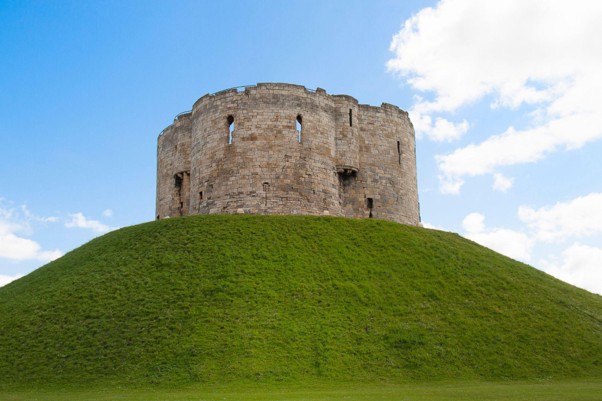
Additionally, William commanded his men to build strategically positioned motte-and-bailey castles throughout England, which became powerful symbols of the Norman occupation. These fortifications housed Norman garrisons, controlled important routes, and intimidated surrounding communities.
The Norman dynasty, led by William the Conqueror’s force, consolidated its position through military strength, land redistribution, and political control. Anglo-Saxon nobles lost substantial estates as William rewarded his loyal followers, fundamentally reshaping England’s aristocracy.
Why Was William the Conqueror’s Relationship With His Sons So Troubled?
William could defeat armies, suppress rebellions, and command kingdoms, yet controlling his own family proved considerably harder.
His eldest son, Robert Curthose, was an accomplished warrior with ambitions of his own. However, disagreements over authority and Robert’s future inheritance created lasting tensions between father and son. Eventually, their relationship deteriorated into open rebellion.
During a fight at Gerberoy in 1079, Robert reportedly unhorsed and wounded his father without initially recognising him. This extraordinary confrontation exposed the divisions within a family supposedly united by royal ambition. Unlike his ruthless and calculating father, Robert Curthose developed a reputation for generosity, courage, and impulsiveness. These contrasting characteristics would profoundly influence the family’s future.
Why Did Robert Curthose Inherit Normandy Instead of England?
When William the Conqueror died in September 1087, his territories were divided between his surviving sons.
Robert Curthose inherited Normandy, while his younger brother William Rufus became William II of England. Their youngest brother, Henry, received a substantial financial inheritance.
Robert’s claim to Normandy had been established long before his father’s death. Despite their disagreements, William could not easily disregard his eldest son’s recognised expectations. England, however, was a conquered kingdom without an equally straightforward hereditary succession.
The division created immediate political difficulties. Powerful nobles possessed estates on both sides of the Channel, forcing them to navigate competing loyalties. For Robert, being William the Conqueror’s son offered prestige but no guarantee of political security.
What Made Robert Curthose a Remarkable Crusader?
Although Robert Curthose struggled to maintain authority in Normandy, his military abilities became particularly evident during the First Crusade.
In 1096, Robert Curthose departed for the Holy Land after raising funds by pledging Normandy to his brother, William Rufus. Robert participated in major crusading campaigns, including the prolonged siege of Antioch and the capture of Jerusalem in 1099. His courage and battlefield leadership earned considerable recognition among contemporary writers.
These achievements challenge the familiar portrayal of Robert as an ineffective nobleman. His reputation as a crusader reveals a capable military leader whose successes deserve recognition alongside his political failures.
How Did Henry I Defeat His Elder Brother?
Following William Rufus’s death in 1100, his youngest brother, Henry I, swiftly claimed the English throne while Robert was returning from the First Crusade. Robert challenged Henry’s authority, invading England in 1101. The brothers negotiated the Treaty of Alton, but their rivalry continued.
Henry I subsequently exploited Normandy’s political instability, eventually invading the duchy. On 28 September 1106, the brothers confronted one another at the Battle of Tinchebray. Henry I emerged victorious, capturing Robert and bringing Normandy under English royal control. Robert spent the remainder of his life in protective custody, mostly in Cardiff castle, dying in 1134.
Did Medieval Chroniclers Unfairly Shape Robert’s Reputation?
Medieval chroniclers frequently portrayed Robert Curthose as weak, extravagant, or incapable of effective government. However, historical accounts were often influenced by political loyalties, religious priorities, and the interests of victorious rulers. Robert’s defeat made his shortcomings particularly convenient to emphasise, while his achievements received less attention. Robert was one of the few honest leaders of the first crusade, and the only one to receive a Roman style Triumph in Constantinople by the grateful Emperor Alexios Comnenus.
Alternatively, at History Reimagined, I examine these inherited narratives, separating documented events from interpretations shaped by power and propaganda. Robert was undoubtedly imperfect, but his story deserves more than the judgement of his enemies.
How Does The Wayward Prince Trilogy Bring Robert’s Story to Life?
The Wayward Prince Trilogy I have written explores Robert Curthose’s extraordinary journey through three historical fiction novels: The Wayward Prince, The Warriors of the Cross, and The Vengeful Son.
Through researched historical events, imagined conversations, and compelling personal conflicts, I explore the ambition, courage, romance, and betrayal surrounding this overlooked Norman prince. My aim is not to rewrite established facts, but to illuminate the human experiences concealed between them.
For readers fascinated by medieval England, royal succession, and the personalities behind historical events, I invite you to discover Robert’s remarkable story through my trilogy of historical novels.
History remembers the conquerors. My historical novels explore those they left behind.